

In games where players compete, like CSGO and Valorant, it’s really important to have a fair game for everyone. Services such as FACEIT invest a lot in anti-cheat systems, and other tools like Faceit Finder banned trackers give players more insight into the game.. These tools allow users to verify if someone has a history of bans, enabling them to avoid cheaters and toxic players.
Players can simply paste an ID or nickname into the search bar. If the FACEIT finder says banned, the player may have violated FACEIT’s rules, or it may be related to cheating or behavioral problems.
What Does It Mean When Faceit Finder Says “Banned”?
When Faceit Finder shows that a player is “banned,” it means their account has been flagged for breaking FACEIT’s rules. This could be due to cheating, exploiting the system, or repeated toxic behavior during matches. Players with this kind of history often have a very low Trust Factor score.
To check, all you have to do is enter their nickname or player ID into the search bar. If the result says “banned,” it’s a strong sign that the player was removed for violating the platform’s code of conduct.
It’s a helpful tool for staying aware of who you’re teaming up with—and avoiding those who might ruin the experience for everyone else.
Why Do Players Get Banned on FACEIT?
Players can get banned on FACEIT for all sorts of reasons—most commonly for cheating, smurfing, or toxic behavior. The FACEIT anti-cheat system does a solid job of automatically catching things like software manipulation, aimbots, or wallhacks. On the other hand, issues like verbal abuse or intentionally throwing games usually get flagged through player reports, which can trigger a manual review.
That’s where Faceit ban finder tools come in handy. They show you the details behind a ban, so you’re not left guessing. If someone you recently played with has suddenly disappeared or been flagged, there’s a good chance they crossed the line and broke one of FACEIT’s strict community rules.
It’s not about pointing fingers—it’s about transparency, awareness, and keeping the competitive environment fair for everyone.
How Faceit Ban Finder Detects Banned or Suspicious Players
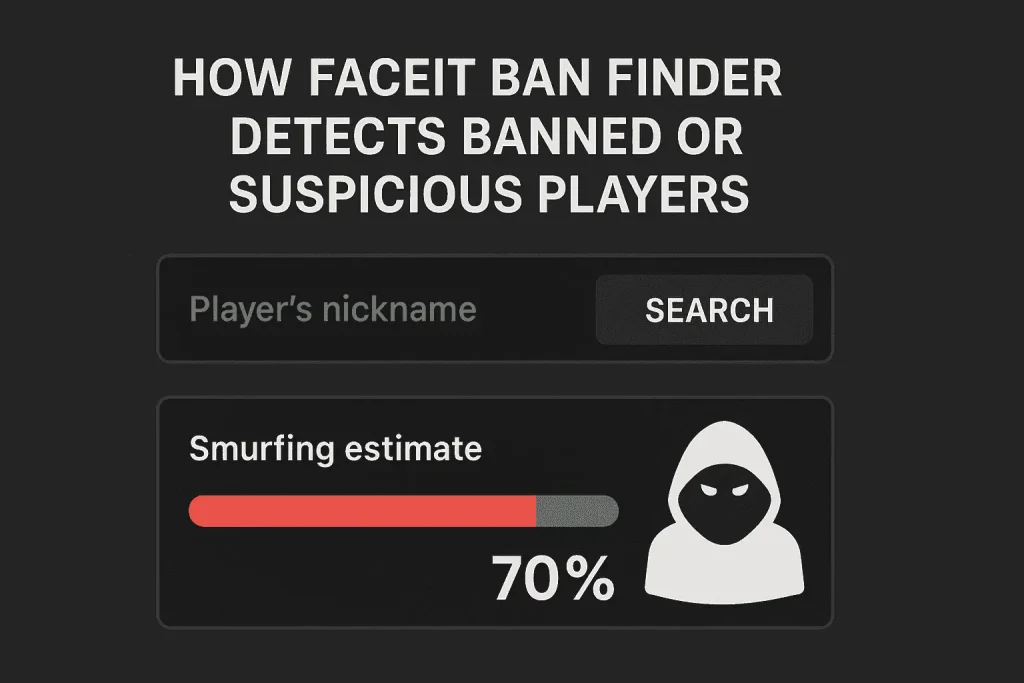
It feels bad to suspect someone of cheating without having any real proof. That’s exactly why tools like Faceit Finder have become so popular—they offer players some peace of mind.Just pop in a player’s nickname, and Faceit Finder quickly gives you a smurfing estimate, showing how likely it is that someone’s playing on a lower-ranked account, which is a key feature of a Faceit multi-account finder.
It’s also handy for checking if someone’s been banned—especially when a familiar face suddenly disappears from your matches. A lot of players use it to keep an eye on their friends list or just satisfy their curiosity. It’s not about calling people out; it’s about staying informed and keeping the game fair.
How to Check Faceit Finder Banned Friends
In competitive gaming, trust and fair play matter. That’s why it’s helpful to know who you’re teaming up with. Using Faceit Finder to check if any of your friends are banned can give you a clearer picture of who you’re playing alongside.
Sometimes it’s surprising to see someone you know with a bad record—but it’s also a wake-up call. It reminds all of us to play clean and stay accountable. After all, no one wants to be linked to cheating, toxic behavior, or unfair gameplay. Keeping your team honest not only protects your own reputation, but it also makes the game more enjoyable for everyone.
Faceit Finder makes it easy to search by username and quickly see if someone has faced bans or other penalties. It’s a simple step, but it goes a long way in making sure your matches stay fair and competitive.

How to Avoid Getting Banned on FACEIT
Avoiding a ban is too simple: just play fair, have conversations respectfully, and don’t exploit the system. Don’t use third-party cheats or macros. Avoid playing on multiple accounts; it is also known as smurfing. Lastly, keep your chat clean—excessive toxicity or abusive language can lead to suspensions.
If you’re tense due to being flagged, just notice your behavior and check FACEIT’s terms of service. Even if you’re banned, Faceit Finder’s banned system provides a chance for users to appeal through the official support channels, especially if you believe it was a mistake of the system.

Faceit Finder’s Role in Removing Hackers and Toxic Players
FACEIT and similar tools like FACEIT Finder are here to protect competitive integrity. The more players use this tool, the cleaner the game becomes. If a suspicious account gets banned, the ban will be shown on Faceit Finder, discouraging further abuse.
Consider Faceit Finder as the safety check for the community. It may not replace FACEIT’s detection systems, but it helps gamers stay informed and play smarter regularly.
Final Thoughts on Faceit Ban Finder and Fair Gaming
In competitive gaming, your reputation is everything. Whether you’re using Faceit Finder, or searching for opponents, staying informed matters. Faceit Finder doesn’t just track stats—it supports a healthier, fairer experience for everyone involved.